Fire Alarm Testing Requirements for UK Businesses: The Complete 2026 Guide
A fire alarm is only useful if it works when it is needed. For UK businesses, regular fire alarm testing is therefore an important part of maintaining a safe workplace and meeting wider fire safety responsibilities.
But how often should a commercial fire alarm be tested? Who is responsible for arranging the checks? Does a business need professional servicing, and what records should be kept?
The answers are not quite as simple as putting a date in the calendar every six months. Businesses need to consider their fire risk assessment, the type of fire detection system installed, relevant legislation, and recognised standards such as BS 5839-1:2025.
This guide explains the key fire alarm testing requirements UK businesses should understand, including weekly user testing, professional servicing, logbooks, monitoring systems and the responsibilities of the person in charge of fire safety.
Important: This guide focuses primarily on non-domestic premises in England and Wales. Fire safety legislation differs in Scotland and Northern Ireland, so businesses operating there should follow the applicable national requirements.
What Are the Fire Alarm Testing Requirements for UK Businesses?
The starting point is the Regulatory Reform (Fire Safety) Order 2005, which applies to most non-domestic premises in England and Wales. It places duties on the person responsible for fire safety within the premises.
Under the Order, fire safety equipment and systems must be maintained appropriately. GOV.UK also states that businesses must carry out regular checks to ensure fire alarm systems are working and that faults are recorded.
Government guidance for offices and shops provides more specific practical recommendations. It says that fire-warning systems should be tested weekly, with a different manual call point used for each successive test. It also recommends six-monthly servicing and preventive maintenance by a competent person with specialist knowledge.
This means businesses should think about fire alarm maintenance as an ongoing process rather than a single annual compliance exercise.
Who Is the Responsible Person?
The responsible person has overall responsibility for fire safety arrangements. Depending on the circumstances, this could be:
- An employer
- The building owner
- A landlord
- An occupier
- A facility or building manager
- A managing agent
- Another person with control over the premises
Where more than one responsible person is involved, they must work together to meet their responsibilities.
The responsible person can delegate practical tasks, such as carrying out a weekly alarm test, to suitably trained staff. However, delegating a task does not mean fire safety can simply be ignored by the person with overall responsibility.
How Often Should Fire Alarms Be Tested in Commercial Premises?
A typical maintenance programme involves several different levels of checking.
|
Type of check |
Typical frequency |
Who carries it out? |
|
Routine panel check |
Regularly |
Responsible person/trained staff |
|
Fire alarm user test |
Weekly |
Trained staff or responsible person |
|
Professional servicing |
Typically, six-monthly |
Competent specialist |
|
Wider system review |
As appropriate to the system and risk |
Competent professional |
The exact arrangements should reflect the premises, system design, manufacturer's requirements, and fire risk assessment.
What Is Involved in Professional Fire Alarm Servicing?
Weekly user testing is not a substitute for professional maintenance.
Government guidance for offices and shops recommends six-monthly servicing and preventive maintenance by a competent person with specialist knowledge of fire-warning and automatic detection systems.
Professional commercial fire alarm maintenance is more comprehensive than a weekly user test.
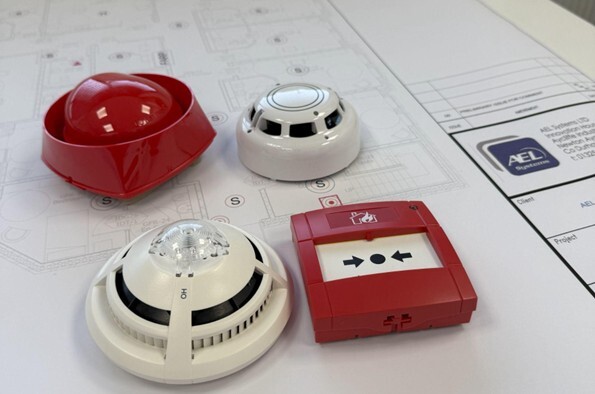
Depending on the system and its design, a competent engineer may inspect and test areas including:
- Fire detectors
- Manual call points
- Alarm sounders
- Visual alarm devices
- Control and indicating equipment
- Fault indicators
- Power supplies
- Standby batteries
- System wiring and connections
- Zone configuration
- Fire alarm zone plans
- Physical condition of equipment
- Previous faults
- False alarm history
- System modifications
The engineer should also identify defects or issues that could affect the reliability of the system.
What About a Fire Alarm System Service for a Small Business?
Small businesses sometimes assume that smaller premises means fire alarm maintenance is less important.
The opposite is often true from a practical management perspective: smaller businesses may have fewer staff available to manage compliance, meaning important checks can easily be forgotten.
A fire alarm system service for small business premises should still be appropriate to the system installed, and the risks identified through the fire risk assessment.
The government's guide for small non-domestic premises states that businesses must ensure fire protection measures are maintained in good condition and effective working order. It also recommends keeping suitable records through a logbook or electronic record.
For a small business, a sensible approach is to have:
- A clearly identified person responsible for routine checks
- A weekly testing schedule
- A fire alarm logbook or electronic record
- A planned professional servicing arrangement
- A process for reporting faults
- Evidence that faults have been addressed
This makes fire safety easier to manage and provides a clear audit trail.
Fire Alarm Logbook Requirements UK Businesses Should Know
Testing the alarm is only part of the process. Businesses should also be able to demonstrate what has been tested, when it was tested, and whether any problems were identified.
A fire safety logbook can provide this record.
Government guidance for small non-domestic premises recommends keeping a suitable record of testing and maintenance in a logbook or electronic record.
A useful fire alarm logbook should record information such as:
- Date of each test
- Time of each test
- Manual call point or device tested
- Faults identified
- False alarms
- Repairs
- Maintenance visits
- Servicing dates
- System disconnections
- Relevant system alterations
- Corrective action taken
Fire and rescue service guidance also recommends recording tests, false alarms and maintenance. A logbook should be kept available for inspection.
Why Keep Detailed Records?
Good records can help demonstrate that the business has an active fire safety management process.
They can also help an engineer identify recurring problems and understand the history of the system.
Most importantly, a record should not simply say "tested" every week. It should provide enough useful information to show what happened and whether any issues were identified.
What Happens If You Don't Maintain Your Fire Alarm?
Fire safety enforcement is not theoretical.
In England, fire and rescue services completed 51,020 fire safety audits in the year ending March 2025. Only 58% had a satisfactory outcome recorded. During the same period, 2,972 audits resulted in formal notifications, including 1,728 enforcement notices.
These figures demonstrate why businesses should not wait for an inspection before reviewing their fire safety arrangements.
Enforcement Can Escalate
Where serious fire safety shortcomings are identified, enforcement authorities have a range of powers.
The government's enforcement guidance explains how the Fire Safety Order and Fire Safety (England) Regulations are enforced and outlines the sanctions available to enforcing authorities for non-compliance.
Depending on the circumstances, businesses could face:
- Informal action
- Enforcement notices
- Alteration notices
- Prohibition notices
- Prosecution
- Financial penalties
- Potential criminal consequences for responsible individuals
The precise consequences depend on the circumstances and the legislation applicable to the premises.
The safest approach is therefore not to treat fire alarm maintenance as paperwork that only matters when an inspector arrives. It is an essential part of keeping people safe.
Fire Alarm Testing Requirements by Business Type
Offices
Office buildings should have an appropriate fire detection and warning system supported by regular testing and maintenance.
Particular attention should be paid to:
- Open-plan changes
- Partitioning
- Meeting rooms
- Storage areas
- Out-of-hours occupancy
- Staff awareness
- Large open areas
- High ceilings
- Dust or fumes
- Machinery
- Storage racking
- Changing layouts
Retail Businesses
Retail premises can experience frequent changes to layouts, displays and stock storage.
Businesses should ensure that changes do not obstruct detectors, call points or escape routes.
Hospitality Businesses
Hotels, guest houses, pubs and restaurants can have more complex fire safety arrangements, particularly where people sleep on the premises.
Government guidance for sleeping accommodation also recommends weekly testing and six-monthly servicing by a competent person, while emphasising the importance of appropriate detection and warning arrangements.
Warehouses and Industrial Premises
Warehouses and industrial sites may have:
These factors can affect the suitability and maintenance requirements of the fire detection system.
Small Businesses
Small premises should not assume that fewer employees or a smaller building means fire alarm maintenance can be overlooked.
The government's small non-domestic premises guidance specifically highlights the need for regular testing and maintenance and appropriate record keeping.
Keeping Your Business Fire Alarm System in Good Working Order
Regular Fire Alarm Testing should be treated as part of your wider fire safety management system.
For most businesses, that means establishing a clear routine:
Test → Record → Identify faults → Repair → Service → Review
The weekly user test provides a simple way to check that the system is operating. Professional servicing provides a more detailed assessment of the installation. Good record keeping provides evidence that the business is actively managing its responsibilities.
If you are unsure whether your current testing and maintenance programme is suitable, speak to a competent fire alarm professional who can assess the system against the needs of your premises and current fire safety arrangements.
Need support with your business fire alarm system? A professional inspection and maintenance programme can help you identify issues early, keep appropriate records, and maintain a reliable fire detection and warning system. Contact our team to discuss your premises and arrange the appropriate fire alarm service for businesses.
- CCTV (29)
- Fire (26)
- Security (16)
- Alarm (12)
- Safety (7)
- Case Study (5)
- Access Control (3)
- Burglary (3)
- Intruder (3)
- Data (2)
- Manchester (2)
- Police (2)
- School (2)
- ANPR (1)
- Access (1)
- Assessments (1)
- Avigilon (1)
- BAFE (1)
- Building (1)
- Car Park (1)
- Carbon (1)
- Charity (1)
- Covid19 (1)
- Detector (1)
- Electrical (1)
- Electronic (1)
- IP (1)
- Inspection (1)
- Insurance (1)
- Maintenance (1)
- Milestone (1)
- Mobile (1)
- NSI (1)
- NSI Gold (1)
- Part P (1)
- Regulations (1)
- SP203 (1)
- Smartphone (1)
- Smoke (1)
- Statistics (1)
- Theft (1)
- Thermal (1)
- Touchless (1)
- Training (1)
- vacancy (1)
- September 2026 (1)
- July 2026 (2)
- May 2026 (2)
- April 2026 (2)
- March 2026 (7)
- January 2026 (2)
- December 2025 (3)
- November 2025 (2)
- October 2025 (2)
- September 2025 (2)
- May 2024 (1)
- March 2024 (2)
- February 2024 (2)
- January 2024 (2)
- December 2023 (3)
- October 2023 (1)
- August 2023 (1)
- July 2023 (3)
- June 2023 (3)
- May 2023 (3)
- April 2023 (3)
- March 2023 (3)
- February 2023 (3)
- April 2021 (1)
- March 2021 (2)
- January 2021 (2)
- December 2019 (1)
- October 2019 (2)
- October 2016 (1)
- September 2016 (1)
- August 2016 (1)
- July 2016 (1)
- June 2016 (1)
- May 2016 (1)
- April 2016 (1)
- December 2013 (1)
- November 2013 (2)
- October 2013 (5)
- September 2013 (3)
- August 2013 (2)
- July 2013 (2)
- June 2013 (6)
- May 2013 (5)
- April 2013 (4)
- March 2013 (4)
- February 2013 (4)
Subscribe by email
You May Also Like
These Related Stories
The Crucial Role of Professional Fire Alarm Systems and CCTV Installation In Your Business Premises
Business Intruder Alarm Systems: Why Certification Matters